The claim
Text messages saying you owe a speeding, parking or traffic fine and must pay through a link or QR code, the pattern Isle of Man police warned about on 21 September 2026, are genuine fine notices.
How this check was done
Researched on 26 September 2026. This reviews a documented scam pattern using a police warning on the Isle of Man reported on 21 September 2026, an alert from the US Federal Trade Commission and warnings from two UK transport bodies. We did not examine a specific text message.
What the texts say
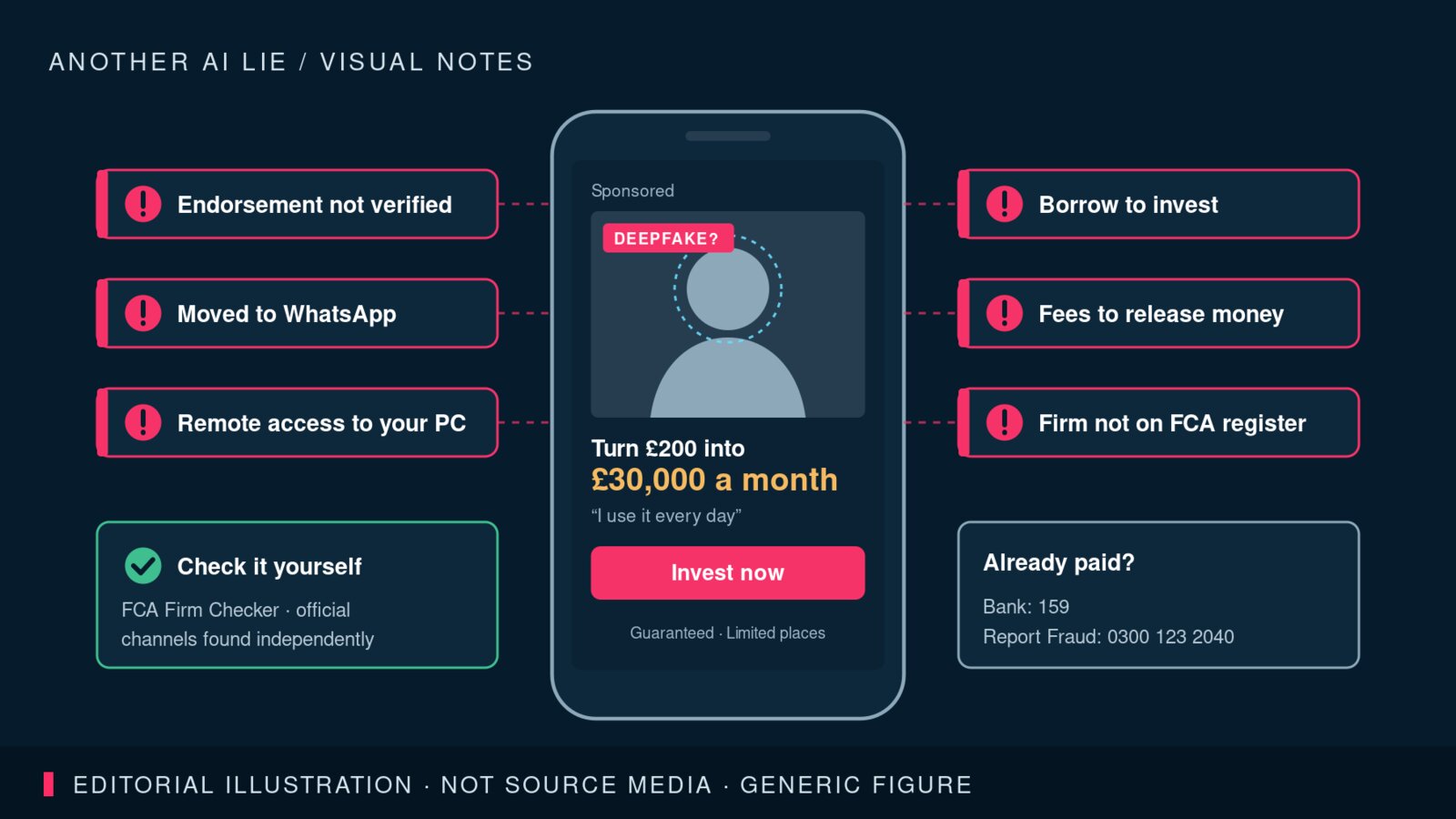
The message says you were caught speeding or owe a parking or traffic fine. It gives a case number, a link or a QR code, and a deadline. Some offer a discount if you pay quickly. Others threaten court, extra charges or losing your licence.
Why it is a scam
The organisations named in these texts say they did not send them, or that people should check through official channels instead. Police on the Isle of Man, the UK Department for Transport, the DVSA and the US Federal Trade Commission all give the same advice: do not click, do not pay through the message, and check any fine yourself.
What to do
Do not click the link or scan the code. If you think you might really have a fine, look it up on the official website of the police, council or court by typing the address yourself, or call them on a number you already have. If you paid or entered card details, call your bank straight away. In the UK, the US and Canada you can forward the text to 7726 for free.
The evidence record
The warning from Isle of Man police.
The Isle of Man Constabulary said it had received a high number of calls about fraudulent texts. The messages refer to a 'Traffic Violation Notice' with a case number, say the recipient's vehicle broke the speed limit and offer a 50% discount for paying within 48 hours. Police said not to respond, click any links or take any action, to delete the message and report it, and that anyone who had used the link should contact their bank immediately. [iom]
Limits: Reported by Isle of Man Today. We did not see a copy of the text or the police's own post.
Sources: iom
The same pattern in the United States.
The FTC described texts that imitate court notices, with fake state seals and case numbers, telling people to scan a QR code and pay a traffic violation to avoid court, and threatening judgments and fines. It advises not responding or scanning, and checking with the court directly using contact details you already know. [ftc]
Limits: A US alert; details of the messages differ from the Isle of Man texts.
Sources: ftc
UK Department for Transport.
The Department for Transport said texts claiming to come from it and asking people to pay fines for outstanding traffic tickets were a scam and had not been sent by the department. It advised not clicking the link or sharing personal or financial details, and reporting the message to report@phishing.gov.uk or 7726. [dft]
Limits: An earlier warning (July 2025) about a similar message.
Sources: dft
UK Driver and Vehicle Standards Agency.
The DVSA warned about texts claiming the recipient had a parking penalty charge and threatening driving bans, extra fees or court action, and said it does not issue or deal with parking fines. [dvsa]
Limits: A 2024 warning about a similar message.
Sources: dvsa
What the warnings mean for the claim.
Authorities in three places describe the same features: an unexpected text about a fine, a link or QR code, a short deadline or a discount for paying quickly, and threats of court or penalties. Each says the message did not come from them or should be checked through official channels. A text with these features cannot show that a fine is real. [iom] [ftc] [dft] [dvsa]
Limits: A pattern finding. Genuine fines exist; a specific fine can only be confirmed through the official body.
Our conclusion
FAKE: an unexpected text demanding payment of a speeding, parking or traffic fine through a link or QR code matches a documented scam pattern and is not proof of a real fine. This is not a verdict on every fine notice.
Confidence and limitations
Strong confidence in the pattern as documented by several authorities. A specific message needs its own check.
We did not see a copy of the Isle of Man text or the police's own post; details come from a news report. The UK warnings are older and concern similar messages. Genuine fines exist; check them only through official channels.
Methods, technical checks and limitations
Source and provenance
The pattern is documented in a police warning reported by Isle of Man Today on 21 September 2026, an FTC alert of 14 April 2026, a Department for Transport warning of 9 July 2025 and a DVSA warning of 23 September 2024. No specific message was examined.
Media analysis
No message or image was examined.
Metadata and technical findings
Not applicable: no file was examined.
Reverse-image and source matching
No reverse image search was run, because no specific message was available.
Detector and tool signals
No AI detector was run.
Independent evidence
Official warnings from a UK government department, a UK government agency and the US consumer protection agency, and a news report of a police warning.
Sources and further reading
- Police warn island residents over traffic fine scam texts
Isle of Man Today · news report of an official police warning · Accessed 2026-09-26
Source published: 2026-09-21
- That text about a traffic violation is probably a scam
Federal Trade Commission · official consumer protection alert · Accessed 2026-09-26
Source published: 2026-04-14
- DfT issues warning about scam text messages asking people to pay fines
Department for Transport (GOV.UK) · official government news release · Accessed 2026-09-26
Source published: 2025-07-09
- DVSA issues warning about parking fine scam text messages
Driver and Vehicle Standards Agency (GOV.UK) · official government news release · Accessed 2026-09-26
Source published: 2024-09-23
Updates and corrections
- 26 September 2026 — First publication following human review.