Scammers send texts, emails, adverts and calls that look real. Many now use AI to copy faces and voices. Here are the most common scams in plain words, what to do if you have been caught, and our checks on scams going round now.
Parcel delivery texts
What happens: A text says your parcel is on hold and asks you to pay a small fee or update your address.
The giveaway: The link is not the delivery company’s real website, and there is a tight deadline.
What to do: Do not click. Check your delivery in the courier’s own app or website.
Your bank’s “fraud team” calls
What happens: A caller says your account is under attack and asks you to move your money to a “safe account”.
The giveaway: A real bank will never ask you to move money to keep it safe.
What to do: Hang up. Call your bank on the number on the back of your card, ideally from a different phone.
Tax refunds, fines and road tolls
What happens: A message says you are owed a tax refund, or owe a fine or toll, and gives a link to pay or claim.
The giveaway: Tax offices and councils do not send links asking for bank details by text.
What to do: Go to the official government website yourself by typing its address.
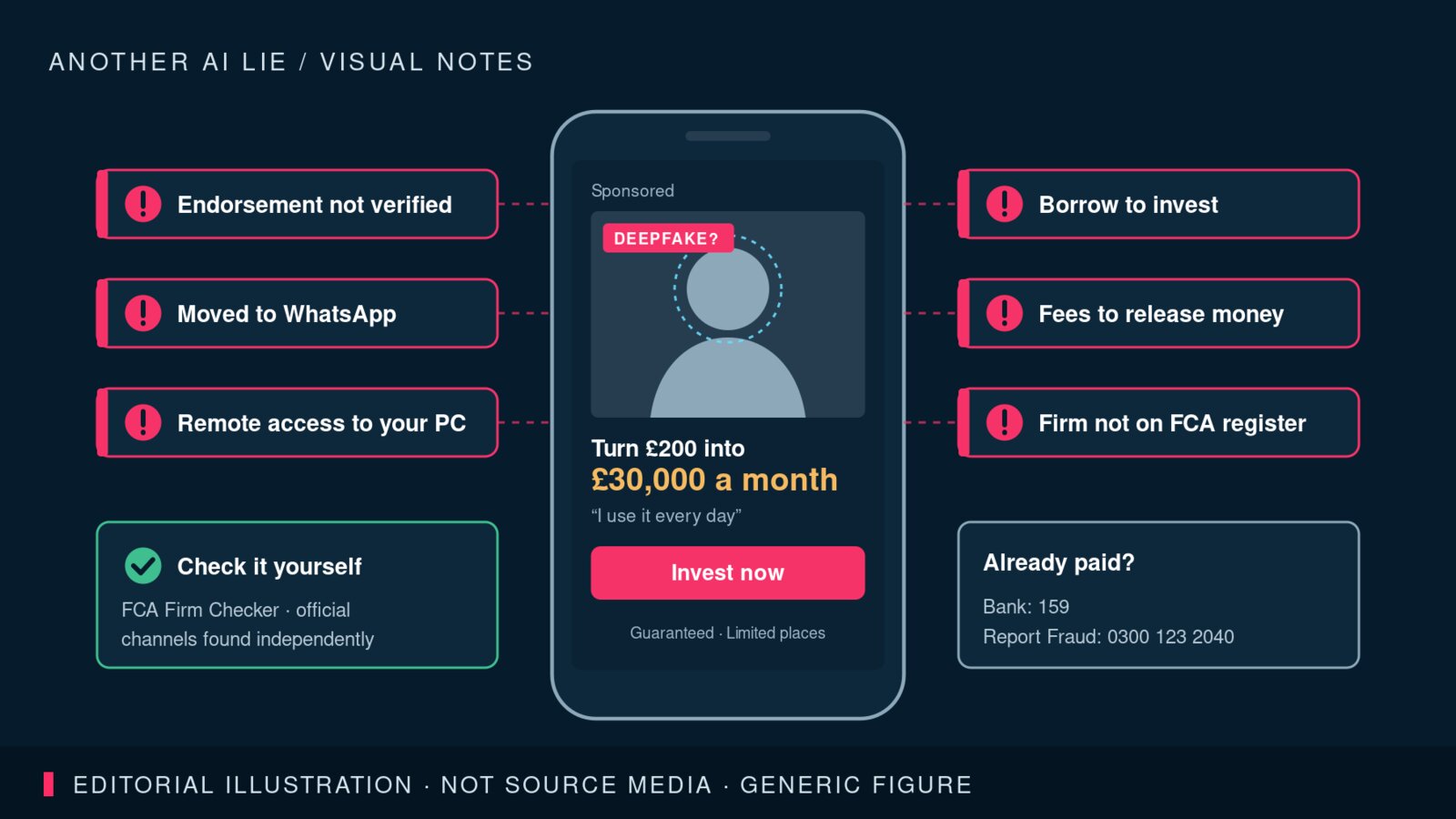
Celebrity investment adverts
What happens: An advert or video shows a famous person recommending an investment with big returns.
The giveaway: Huge or guaranteed returns and a famous face. Videos can now be faked with AI.
What to do: Never invest from an advert. Check the firm with your country’s financial regulator.
Read our check ↗
“Hi Mum, I’ve got a new number”
What happens: A message from an unknown number claims to be your child or relative and asks for money urgently.
The giveaway: A new number and a request for money.
What to do: Call them on the number you already have. Do not pay until you have spoken to them.
A loved one’s voice on the phone
What happens: A call sounds like a family member in trouble who needs money fast. AI can now copy a voice from a short clip.
The giveaway: Panic, secrecy and an unusual way to pay.
What to do: Hang up and call them back on a number you know. Agree a family code word.
Fake shops and too-good deals
What happens: A website or social media advert sells popular items at a very low price.
The giveaway: Prices far below normal, a brand-new website and a request to pay by bank transfer.
What to do: Pay by card rather than bank transfer, and look for reviews on other websites.
Computer help calls and pop-ups
What happens: A call or pop-up says your computer has a virus and asks you to call a number or install an app.
The giveaway: Anyone asking to take control of your computer or phone.
What to do: Never let a stranger control your device. Close the page or hang up.
Requests for a security code
What happens: Someone asks you to read out or forward a code that was just sent to your phone.
The giveaway: Any request for a code. These codes are the keys to your accounts.
What to do: Never share a code with anyone, even someone who says they are from your bank.
Online friends who talk about money
What happens: Someone you met online becomes a friend or partner, then asks for money or suggests an investment.
The giveaway: You have never met in person, and money comes up.
What to do: Never send money or invest because of someone you have only met online.
This page is general information, not legal or financial advice. Reporting details were checked on 26 September 2026. Another AI Lie is not linked to the organisations named.