The claim
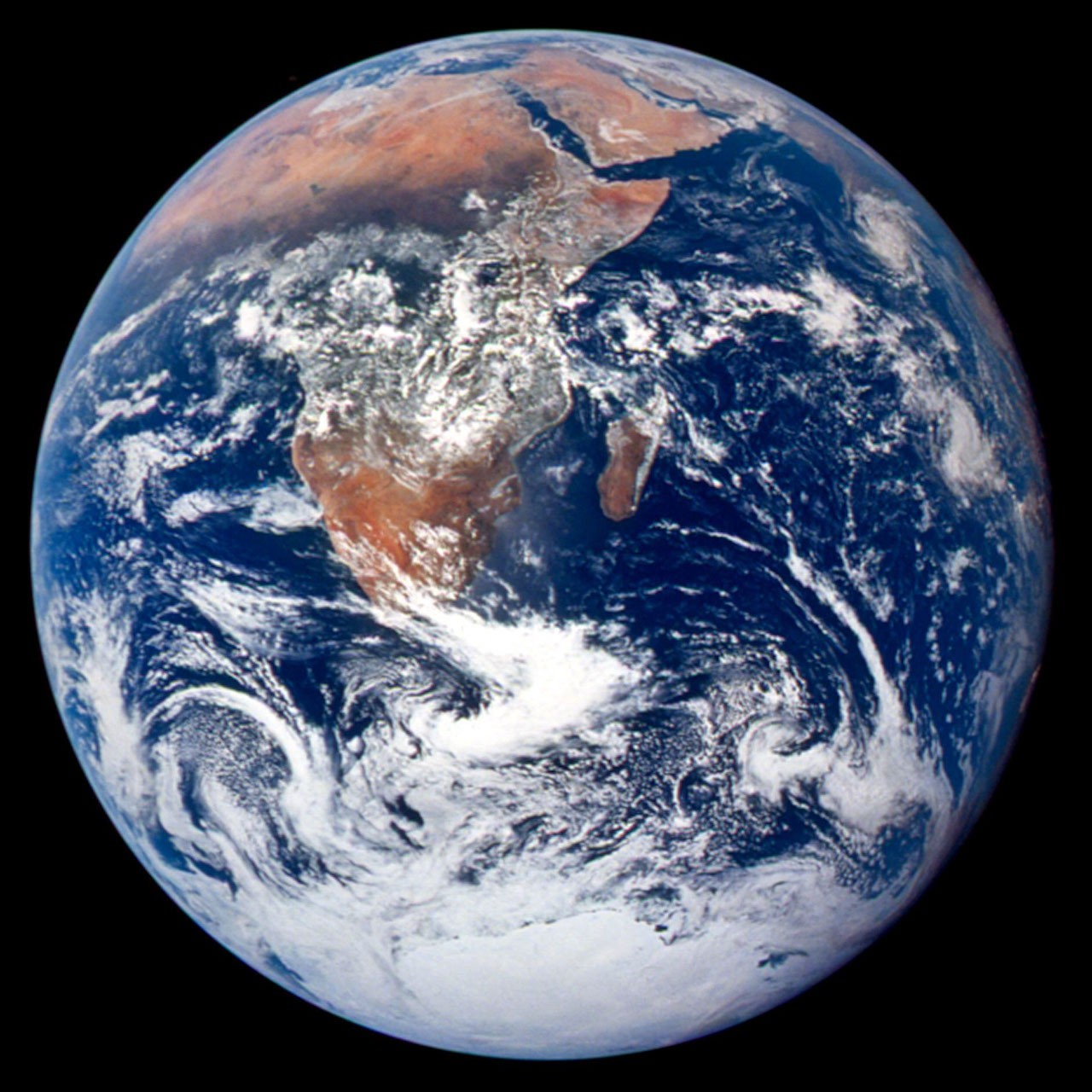
The Apollo 17 image catalogued as AS17-148-22727 is a photograph of Earth taken during the mission.
How this check was done
This is a retrospective review of published records, researched on 22 September 2026. It is not eyewitness reporting or a new forensic examination. The evidence record identifies what each source establishes and where our review stops.
Why the catalogue number matters
An image’s popular name is a poor substitute for an identity. Start with the source page, then compare the composition with the version in front of you. Record the frame identifier alongside the link so that someone else can repeat the check. If your copy has different clouds, labels or a different viewpoint, do not transfer this verdict to it.
What this example teaches
A convincing picture and a reliable history are different kinds of evidence. The useful question is who recorded this particular image and what record survives. Ask that before treating a dramatic appearance as proof either for or against authenticity.
The evidence record
A named frame has an institutional record.
NASA identifies AS17-148-22727 as a photograph taken by the Apollo 17 crew during the journey towards the Moon, using a 70 mm camera. [nasa]
Limits: This is the mission agency’s catalogue description. We did not inspect the original film.
Sources: nasa
Our conclusion
REAL: the archive supports a photographic origin for this named frame. This does not certify that every online copy is unmodified.
Confidence and limitations
Strong confidence in the narrow origin finding. We make no finding about the complete processing history of arbitrary reposts.
The displayed web rendition is not the original film. Cropping, colour changes or added elements in another version would require a separate check.
Methods, technical checks and limitations
Source and provenance
The starting point is NASA’s own image entry, including its catalogue identifier. A social-media caption is not our source. [nasa]
Media analysis
We did not diagnose authenticity from the shape of clouds, the black background or the appearance of continents. Such impressions would not establish a capture history.
Metadata and technical findings
No original capture or production file was obtained. Embedded metadata was not independently examined.
Reverse-image and source matching
This check is anchored to AS17-148-22727. It does not authenticate a separately uploaded image merely because someone calls it Blue Marble.
Detector and tool signals
No AI detector was run. No detector score contributes to this finding.
Independent evidence
The cited record is first-party institutional evidence. We have not supplied a separate forensic reconstruction or an independent examination of the film.
Sources and further reading
- The Blue Marble
NASA Science · primary: institutional record · Accessed 2026-09-22
Updates and corrections
- 22 September 2026 — First publication following human review.